Exploring the science of spirituality, consciousness, and life beyond the physical.
Explore peer-reviewed research, landmark studies and emerging work on near-death experiences, mediumship, telepathy, Remote Viewing, reincarnation, psi, consciousness and the possibility of survival beyond death.
Read the methods. Check the limitations. Follow the original sources. Decide for yourself what the evidence means.
 Channeling & extended consciousnessHelané Wahbeh
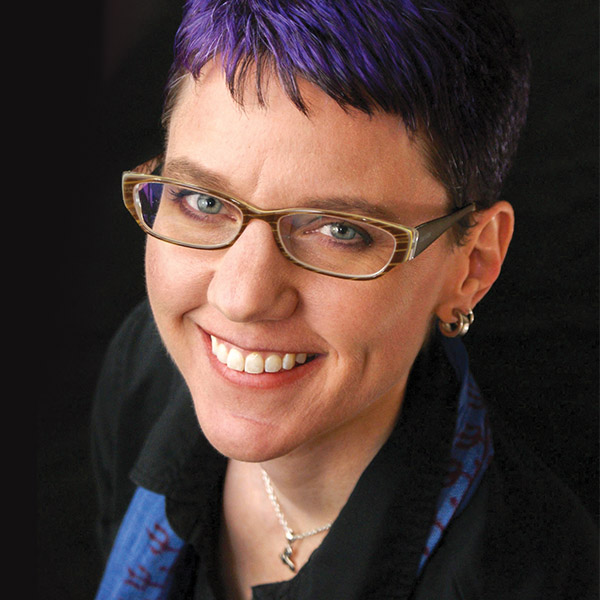 MediumshipJulie Beischel
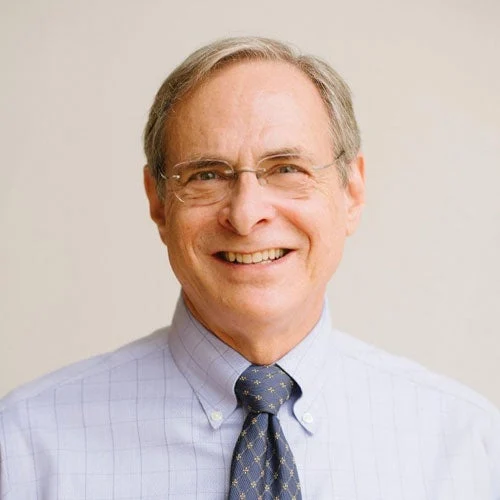 Near-death experiencesBruce Greyson
 ReincarnationJim Tucker
Meet some of the researchers asking the difficult questions.
From clinical psychiatry to statistics and neuroscience, their work has helped turn unusual questions into testable ones.
Helané Wahbeh
Director of Research, Institute of Noetic Sciences
Clinical researcher exploring consciousness, exceptional human experiences and channeling across disciplinary boundaries.
View researcher profileJulie Beischel
Director of Research Emerita, Windbridge Research Center
Researcher known for controlled, blinded studies of mediumship, including tests of accuracy and the experiences reported by mediums.
Researcher profileBruce Greyson
Professor Emeritus, University of Virginia
Psychiatrist and leading figure in modern NDE research, best known for developing the widely used Greyson Near-Death Experience Scale.
Researcher profileJim Tucker
Former Director, UVA Division of Perceptual Studies
Psychiatrist whose work has centred on children who report memories of previous lives.
Researcher profile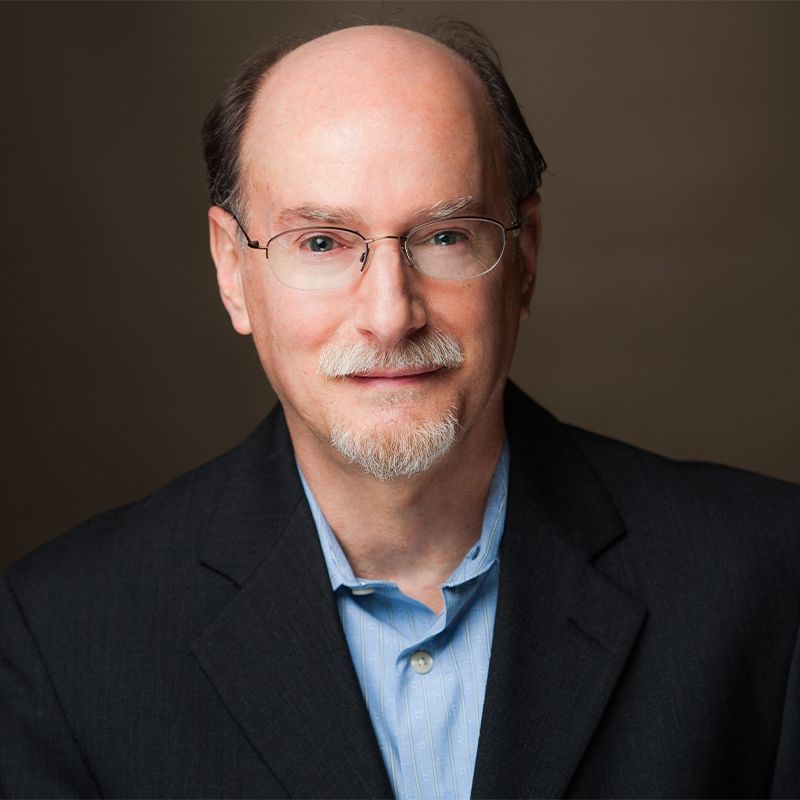
Dean Radin
Chief Scientist, Institute of Noetic Sciences
Experimental researcher investigating psi, precognition and possible interactions between mind and physical systems.
Researcher profile
Jessica Utts
Professor Emerita of Statistics, UC Irvine
Statistician known for evaluating evidence in parapsychology, including US government-sponsored research into Remote Viewing.
Researcher profile
Julia Mossbridge
Cognitive neuroscientist
Cognitive neuroscientist studying time perception, consciousness and physiological findings associated with precognition.
Researcher profile
Marjorie Woollacott
Professor Emerita, University of Oregon
Neuroscientist whose work spans meditation, attention and questions at the boundary between brain and consciousness.
Researcher profileChoose a question. Follow the evidence.
Choose a field and go directly to the studies, methods and sources.
Near-Death Experiences & Consciousness
Research on near-death experiences alongside work examining consciousness itself, from its structure and mechanisms to its relationship with the brain.
Mediumship
Controlled studies asking whether specific, accurate information can be reported when ordinary routes of information are carefully restricted.
Telepathy
Experiments testing whether information can pass between people without any known sensory channel.
Remote Viewing
Laboratory research and historical programmes testing whether people can describe distant or hidden targets without ordinary sensory access.
Reincarnation
Case research on children who report memories attributed to previous lives, including details that can sometimes be checked against people, places and historical records.
The surprise is not that this research exists. It is how much of it has been published.
Decades of research sit across journals, university archives and specialist publications, much of it difficult to find unless you already know where to look.
This database brings the work into one place without stripping away the details that matter: methods, limitations, competing interpretations and unanswered questions.
Clear summaries
Each detailed entry explains the study in clear language without losing the method, uncertainty or nuance.
Start with the source
Each research entry links back to the original paper, journal, university or institution wherever possible.
Context matters
Findings are presented alongside the study design, sample, limitations and unresolved questions.
Built for exploration
Move from a research field to a specific study, then straight to the original source.
Start with these studies.
The perceptual geometry and chromaticity of near-death experience spaces
Recurrent visual-field configurations included conical, elliptical-arc and ellipsoidal shapes. Type A conical fields were mostly achromatic (78.6%), whereas type B elliptical-arc fields were mostly chromatic (87.1%). Other geometry–colour contrasts varied by analysis.
Terminal lucidity in women with advanced gynecologic cancer: a case series and focused review of the literature
Three of 20 patients briefly regained coherent communication or meaningful interaction within 48 hours before death. Families initially interpreted these episodes as recovery.
Self-Reported Near-Death and Near-Death-Like Experiences in a Chinese Online Sample
Recurring features included out-of-body experiences, bright light, peaceful emotions, life review and encounters with deceased or spiritual beings.
Local field potential changes during euthanasia may parallel with near death experience
The study reports changes in neural field-potential activity around euthanasia that the authors discuss as potentially relevant to neurophysiological models of near-death experiences.
What is being published now.
New papers, reviews and notable developments, selected for relevance and summarised with direct links to the original sources.
Peer-reviewed review links altered states with telepathy, precognition and nonlocal-consciousness hypotheses
In a peer-reviewed hypothesis-and-theory article published on 6 November, Marc Wittmann synthesises survey, experimental and phenomenological research on telepathic impressions, precognition, Remote Viewing and altered states of consciousness. He highlights reports of small statistical effects, mixed replication outcomes and qualitative findings from experienced remote viewers, and proposes combining blinded quantitative tests with detailed first-person accounts. This is a theoretical synthesis, not a new controlled experiment or independent confirmation of nonlocal consciousness; the proposed links between altered states and anomalous cognition remain hypotheses requiring prospective testing.
Read the sourcePilot study explores past-life memories reported after near-death experiences
An archival addition: in a 2025 peer-reviewed pilot study, James G. Matlock interviewed ten women about apparent past-life memories or visions following near-death experiences. All ten reported memories or visions beginning or becoming stronger after the NDE. This small retrospective sample has no control group and cannot establish reincarnation or causality.
Read the sourceRandomized trial reports improved consciousness recovery after 40 Hz brain stimulation
In a peer-reviewed randomized sham-controlled trial, 60 patients with prolonged disorders of consciousness received five days of 40 Hz or 4 Hz high-definition transcranial alternating current stimulation, or matching sham treatment. The 40 Hz group showed greater improvement on the Coma Recovery Scale–Revised, particularly visual and arousal scores, alongside stronger EEG connectivity. At six months, 37.5% in the 40 Hz group achieved a favourable Glasgow Outcome Scale–Extended score, significantly exceeding sham (P = 0.019). Baseline auditory steady-state responses were associated with treatment response. The four-arm sample was modest, and independent larger trials are needed to establish durability, generalisability and clinical use; the findings concern recovery of responsiveness, not evidence for consciousness independent of the brain.
Read the sourceNew peer-reviewed study maps the geometry and colours of near-death experiences
Researchers combined questionnaires with graphic reconstructions from 50 people reporting near-death experiences, analysing 108 classified reconstructed visual spaces. Recurring spatial forms included cones, elliptical arcs and enclosing ellipsoids. Conical visual fields were predominantly achromatic, while one elliptical-arc category was predominantly coloured; some other differences were sensitive to the statistical method. The study introduces a way to describe the visual and spatial phenomenology of NDEs, but its self-selected sample, retrospective accounts and lack of independent clinical verification cannot establish how the experiences arise or whether consciousness exists independently of the brain.
Read the sourceContact / Kontakt
For research enquiries, collaborations or questions, write to simondecpedersen@gmail.com
Keep exploringStart with the question you cannot quite let go.
Choose a field, open a study and see what the evidence actually says.
Explore the database